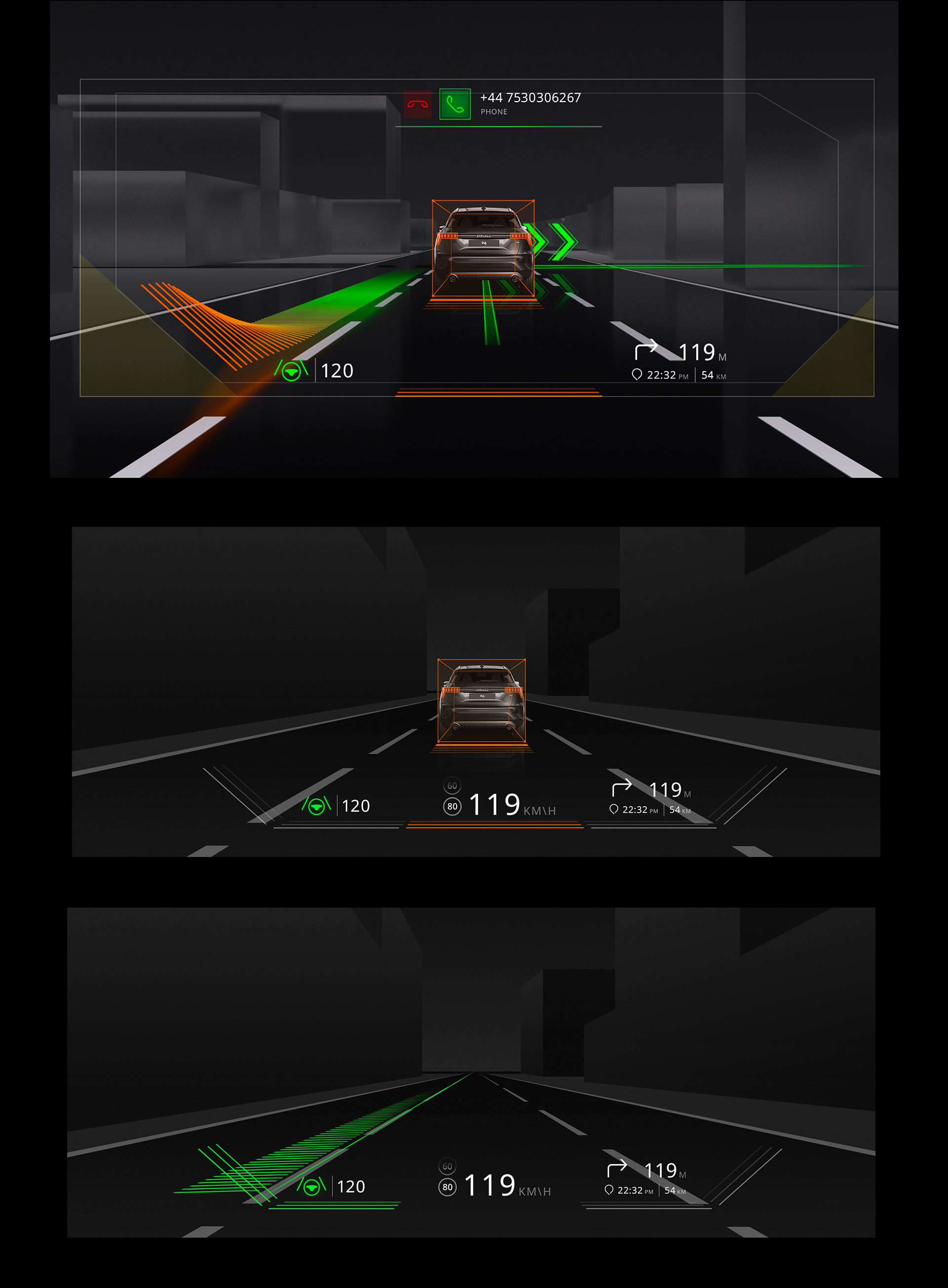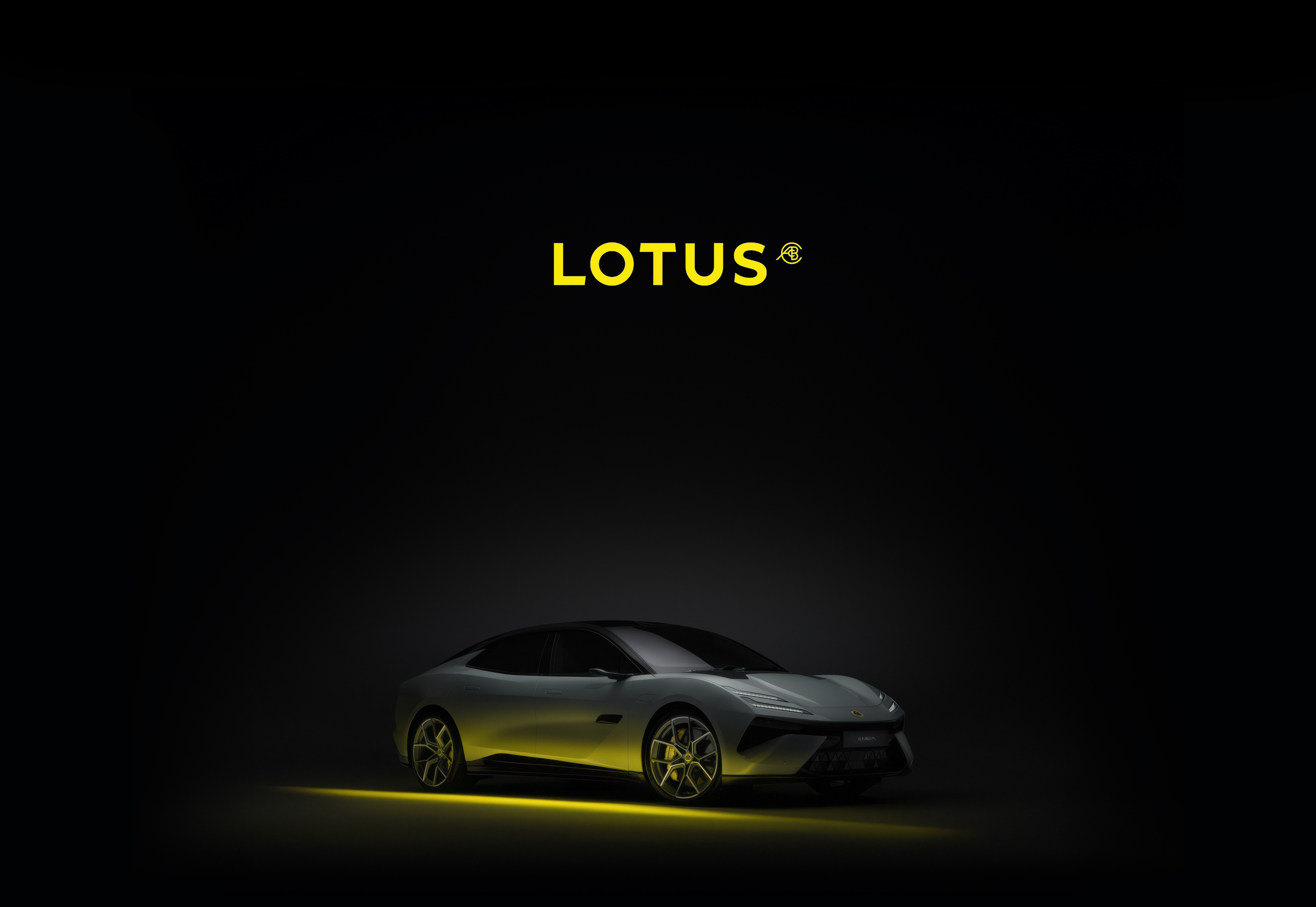
This was my first project for Lotus: the Emeya electric hyper-GT. I was brought in through Territory Studio to develop an ambitious augmented-reality head-up display and explore how the experience could move beyond conventional automotive HUDs.
The concept was straightforward: place ADAS, navigation and key vehicle information directly within the driver’s eyeline on the windscreen. A HUD feels natural when driving and, from an ergonomic perspective, the less time drivers spend looking away from the road, the safer and more intuitive the experience becomes.
We brought in some of the visual character Territory is known for through its FUI work, while keeping everything grounded. This was real product development, not science fiction. We explored bold visual directions and motion language across the key features, aiming for clarity without losing the energy and attitude the car deserved.
As with much automotive HUD work, the available technology still lagged behind the ideas, while more advanced solutions remained too costly to be commercially viable at production scale. The system could not reliably anchor AR graphics to the road and surrounding environment while the vehicle was moving. Despite these limitations, exploring beyond the immediate production constraints was an important part of the brief.
Much of what we developed was scaled back later in the programme, which is fairly standard in automotive HMI development. Even so, the central idea remains convincing. Once HUDs can anchor graphics with the necessary fidelity, accuracy and intelligence at a viable cost, this space will move quickly.
The concept was straightforward: place ADAS, navigation and key vehicle information directly within the driver’s eyeline on the windscreen. A HUD feels natural when driving and, from an ergonomic perspective, the less time drivers spend looking away from the road, the safer and more intuitive the experience becomes.
We brought in some of the visual character Territory is known for through its FUI work, while keeping everything grounded. This was real product development, not science fiction. We explored bold visual directions and motion language across the key features, aiming for clarity without losing the energy and attitude the car deserved.
As with much automotive HUD work, the available technology still lagged behind the ideas, while more advanced solutions remained too costly to be commercially viable at production scale. The system could not reliably anchor AR graphics to the road and surrounding environment while the vehicle was moving. Despite these limitations, exploring beyond the immediate production constraints was an important part of the brief.
Much of what we developed was scaled back later in the programme, which is fairly standard in automotive HMI development. Even so, the central idea remains convincing. Once HUDs can anchor graphics with the necessary fidelity, accuracy and intelligence at a viable cost, this space will move quickly.