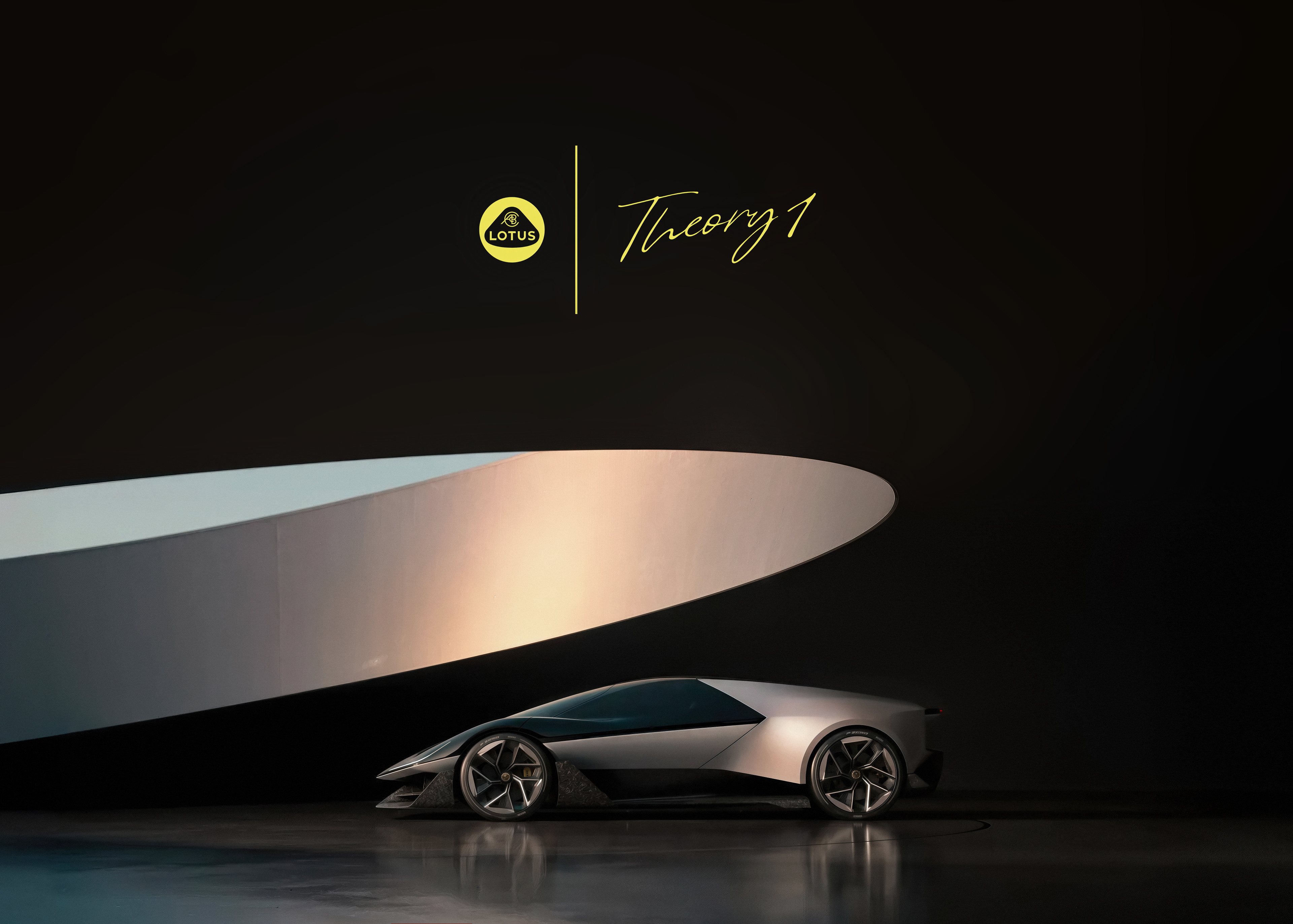
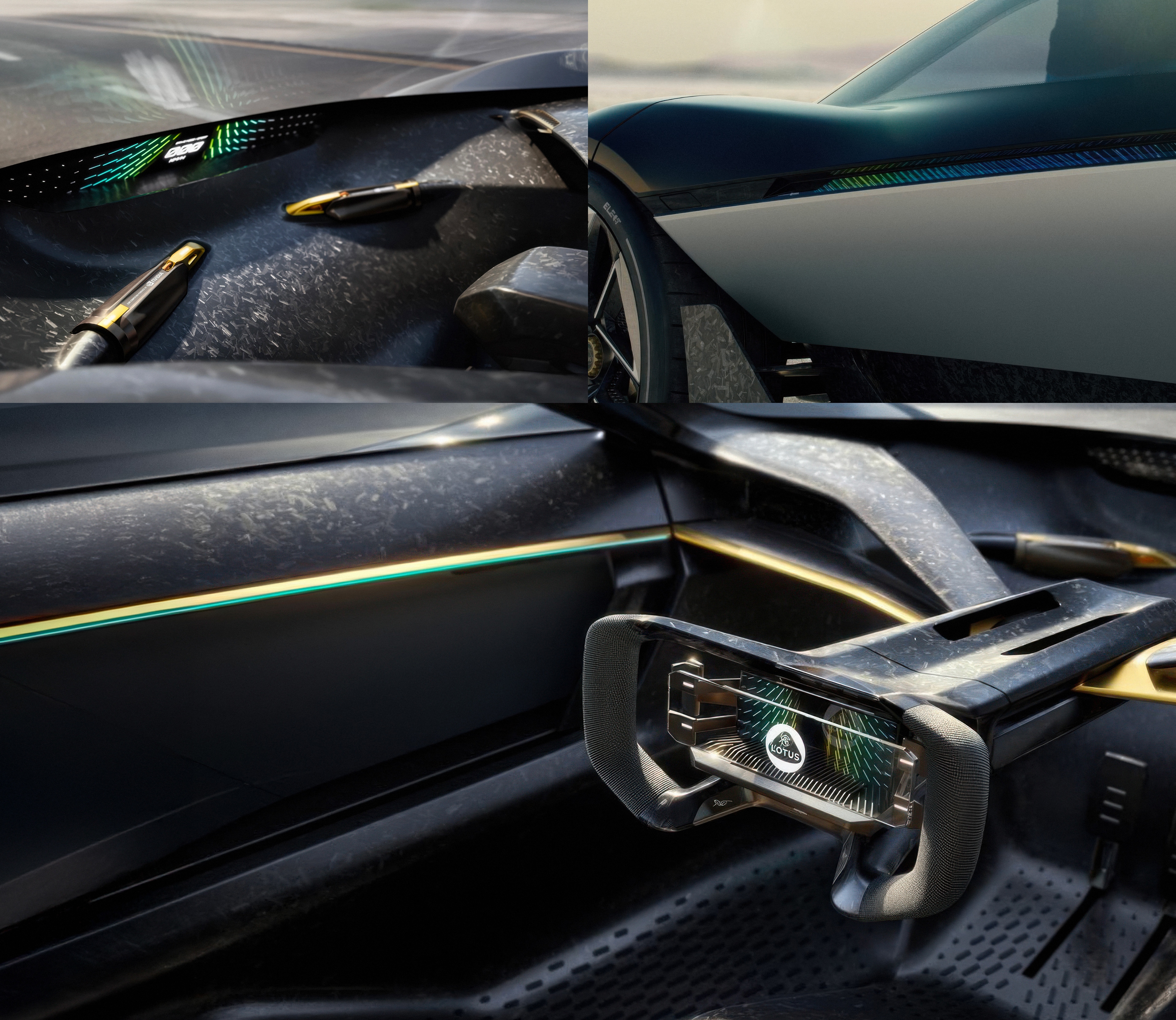
The Lotus Theory 1 represents a bold step forward in design, technology and driver engagement, blending digital innovation with natural and analogue sensibilities. Collaborating closely with Lotus marketing, interior, pre-visualisation and concept car manufacturing teams, I contributed to the design and implementation of key UI components. My work fed into the development of creative UI elements for the steering wheel, interior and exterior tech lines, supporting the team in aligning these features with the vehicle’s overall vision and ensuring they worked seamlessly across both the concept and physical prototype.
Ref. above
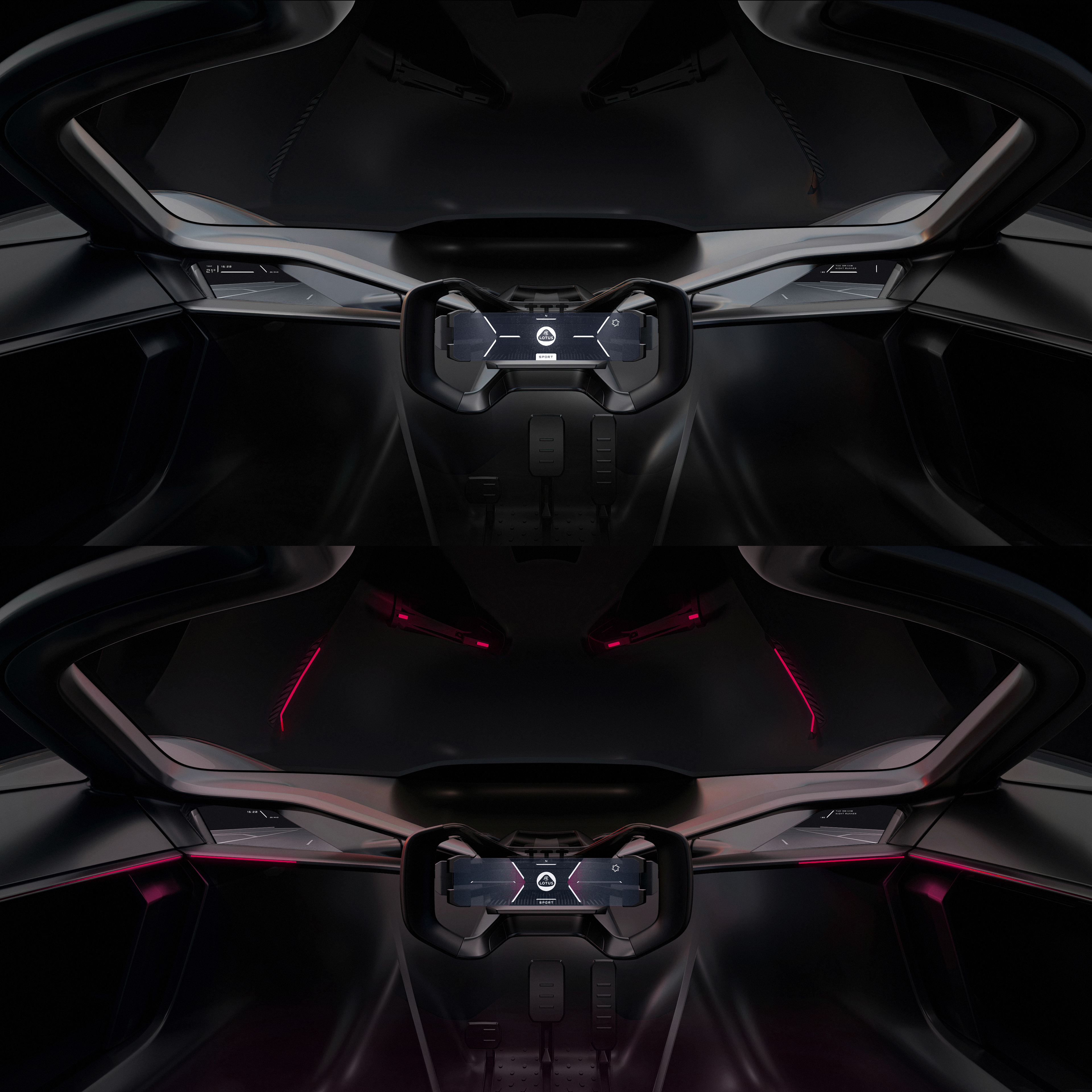
This is the final solution we arrived at. The marketing team initially worked with the visualisation team to create the background needles, with the aim of enhancing the interior light projection and tech line. As the initial proposal was largely superficial, we pushed to introduce greater logic and more meaningful contextual interactions. Externally, the needles conveyed specific information, including locked, charging and opening states. Internally, lines displayed across the steering wheel screen and windscreen cluster communicated turning forces and speed.
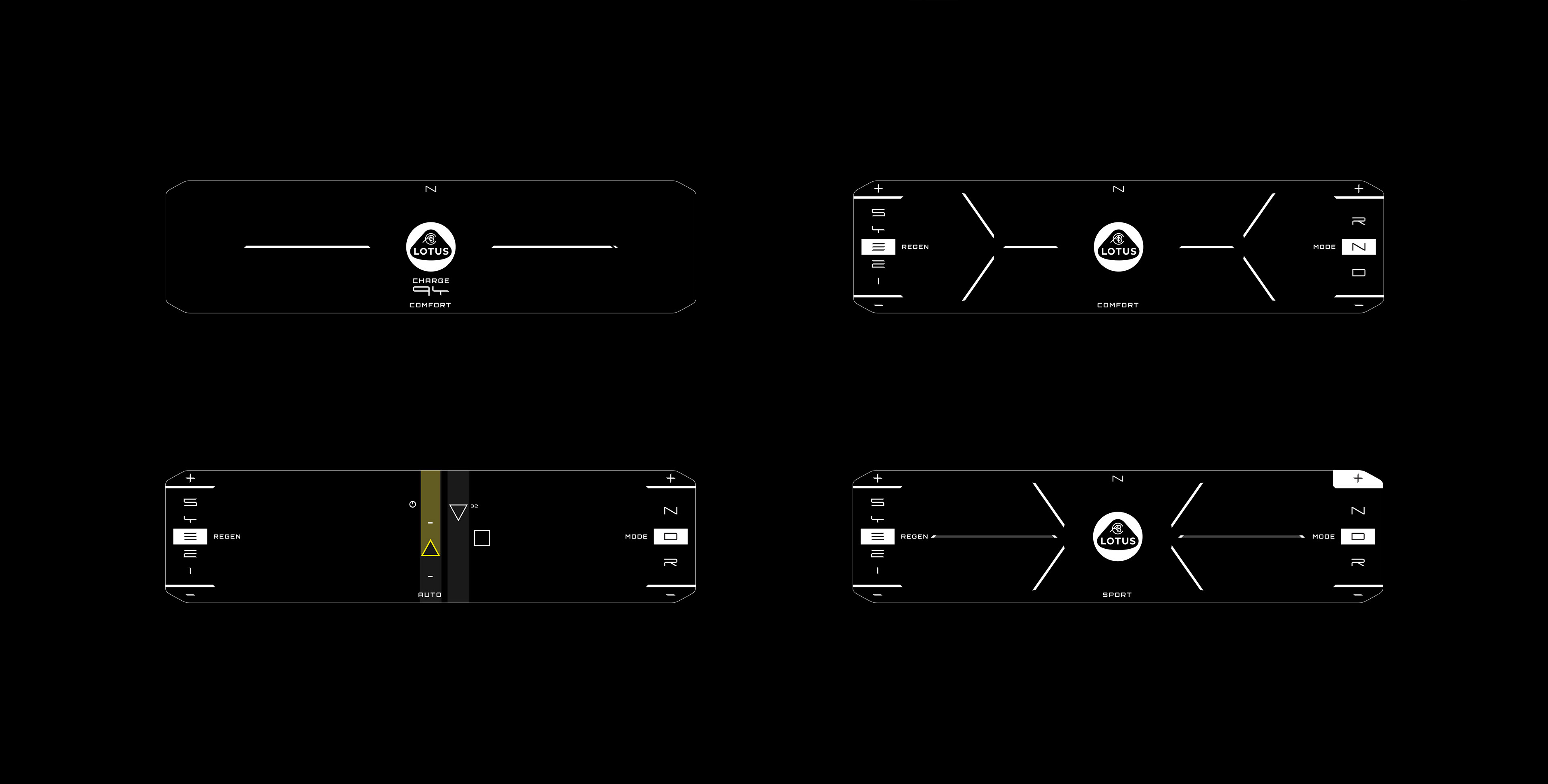
I was closely involved in developing the steering wheel user interface. The vision was to embed a screen centrally within the steering wheel, with an interactive transparent glass display layered over it. Together, these elements could connect the driver more closely to the driving experience, provide feedback on steering inputs and support alerts and other forms of communication. For the front layer, we explored innovative Lumineq glass display technology. This was particularly interesting because the interface had to function like a segmented calculator display: individual elements could be switched on or off, but could not overlap. This introduced limitations around line thickness and the spacing between elements.
Ultimately, the cost and turnaround time required to produce the physical concept car shaped the final direction. We retained the original vision within the previsualisation videos while adopting a simpler etched-glass solution for the physical vehicle. The concept car cycled through a series of scenarios, including Comfort, Sport and Autonomous modes.
This is the final solution we arrived at. The marketing team initially worked with the visualisation team to create the background needles, with the aim of enhancing the interior light projection and tech line. As the initial proposal was largely superficial, we pushed to introduce greater logic and more meaningful contextual interactions. Externally, the needles conveyed specific information, including locked, charging and opening states. Internally, lines displayed across the steering wheel screen and windscreen cluster communicated turning forces and speed.
I was closely involved in developing the steering wheel user interface. The vision was to embed a screen centrally within the steering wheel, with an interactive transparent glass display layered over it. Together, these elements could connect the driver more closely to the driving experience, provide feedback on steering inputs and support alerts and other forms of communication. For the front layer, we explored innovative Lumineq glass display technology. This was particularly interesting because the interface had to function like a segmented calculator display: individual elements could be switched on or off, but could not overlap. This introduced limitations around line thickness and the spacing between elements.
Ultimately, the cost and turnaround time required to produce the physical concept car shaped the final direction. We retained the original vision within the previsualisation videos while adopting a simpler etched-glass solution for the physical vehicle. The concept car cycled through a series of scenarios, including Comfort, Sport and Autonomous modes.
Ref. Above
The concepts above come from an earlier stage in the process, before practical considerations and constraints came into play. Although these designs aren’t particularly refined, they show some creative exploration of a more exotic tone, closer to an aircraft cockpit, with richer colours and greater detail on the glass screen. The wheel design, combined with the internal lighting, had a sci-fi tone reminiscent of a Star Wars TIE Fighter, which I was keen to develop further.
Earlier designs leaned heavily into a Designers Republic and Cyberpunk aesthetic. However, this approach didn’t fully align with the tone and branding of Lotus, leading us to refine the vision to better suit the project’s direction.
The concepts above come from an earlier stage in the process, before practical considerations and constraints came into play. Although these designs aren’t particularly refined, they show some creative exploration of a more exotic tone, closer to an aircraft cockpit, with richer colours and greater detail on the glass screen. The wheel design, combined with the internal lighting, had a sci-fi tone reminiscent of a Star Wars TIE Fighter, which I was keen to develop further.
Earlier designs leaned heavily into a Designers Republic and Cyberpunk aesthetic. However, this approach didn’t fully align with the tone and branding of Lotus, leading us to refine the vision to better suit the project’s direction.
Ref. Above
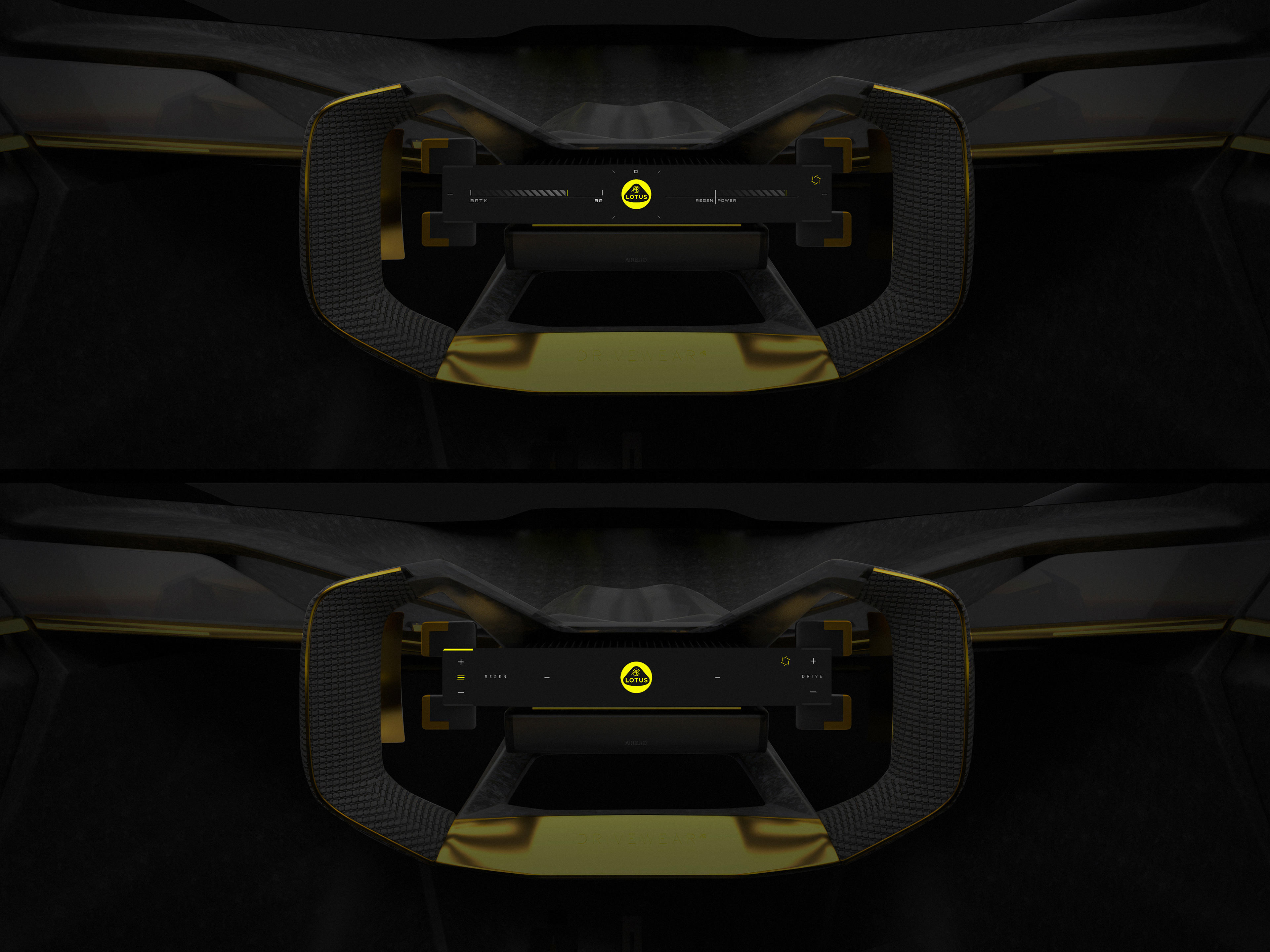
These are some concepts from much earlier in the process, when the interior was still being properly refined, hence the generous use of gold detailing. I’ve kept these in because I like the stripped back slim screen on the steering wheel and the minimal overall design.
These are some concepts from much earlier in the process, when the interior was still being properly refined, hence the generous use of gold detailing. I’ve kept these in because I like the stripped back slim screen on the steering wheel and the minimal overall design.
Ref. Above
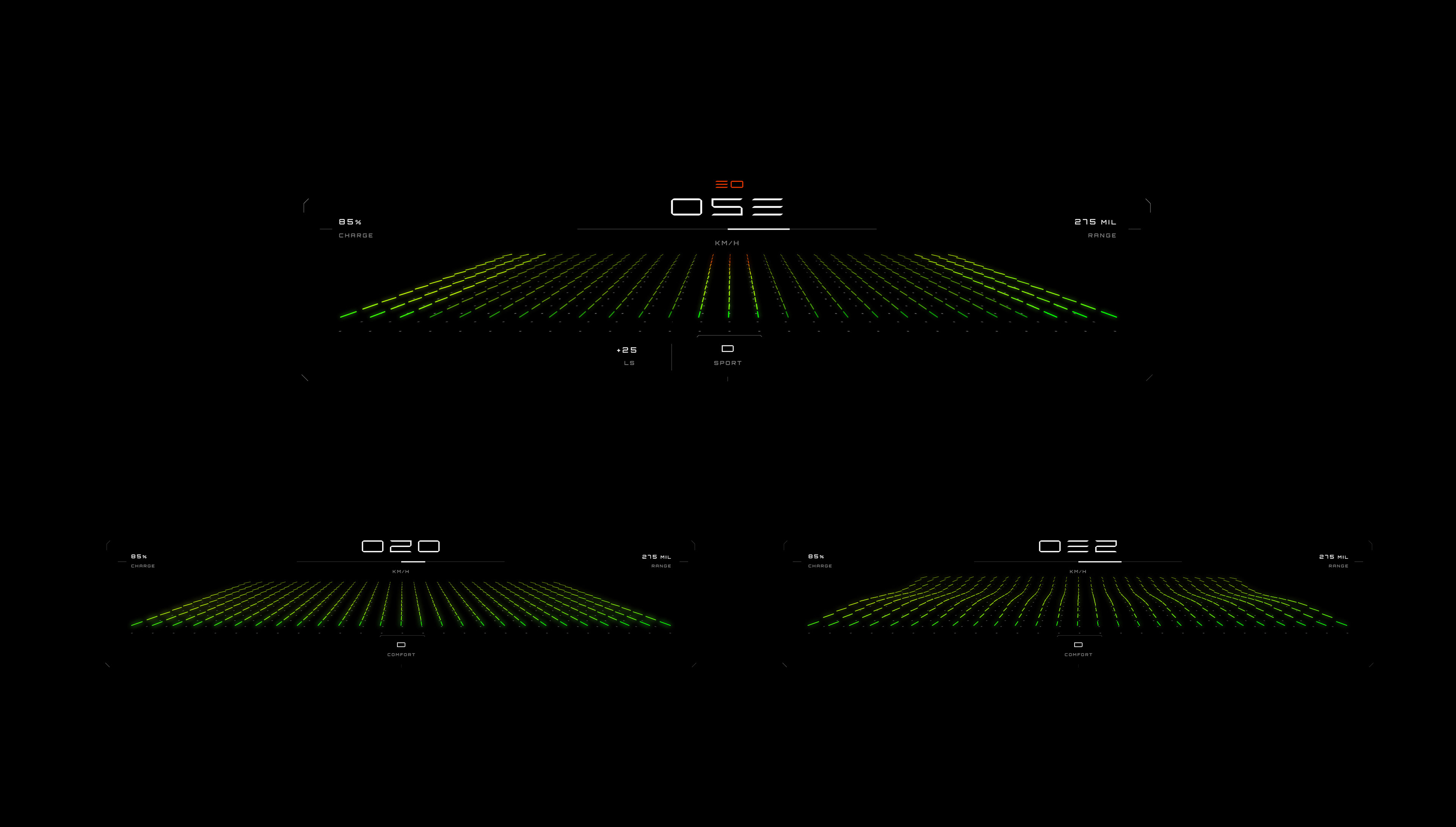
This expanded final exploration builds on the needle concept. I introduced the idea of a needle plane, which communicates the environment surrounding the vehicle. This includes surface elevations and road or lane-edge indications. I also developed the concept further to incorporate performance driving lines and braking guides, similar to those seen in AAA video games.
This expanded final exploration builds on the needle concept. I introduced the idea of a needle plane, which communicates the environment surrounding the vehicle. This includes surface elevations and road or lane-edge indications. I also developed the concept further to incorporate performance driving lines and braking guides, similar to those seen in AAA video games.