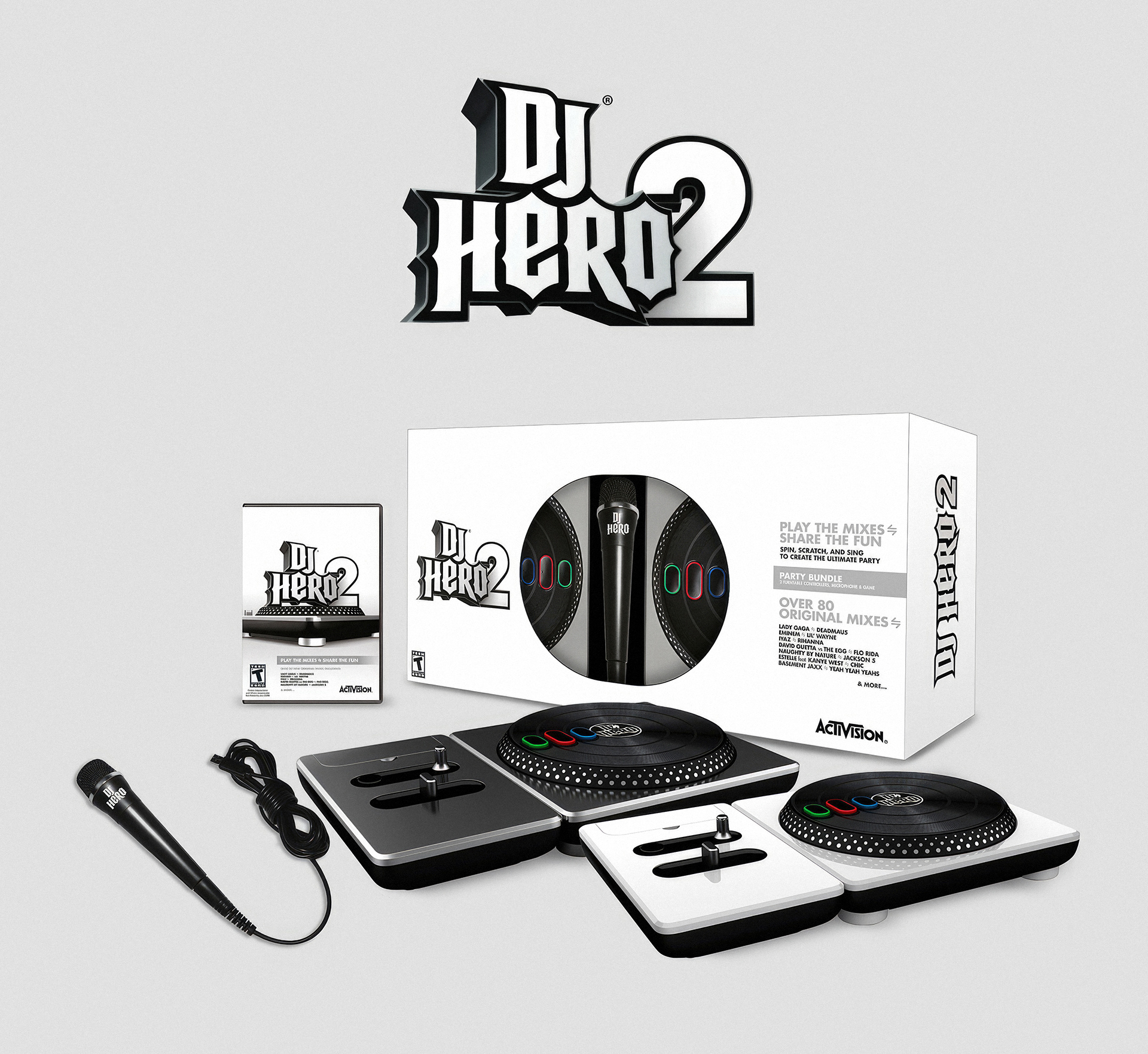
When I joined FreeStyleGames, I quickly moved on to DJ Hero 2, the sequel to the critically acclaimed original. The first game had built a strong foundation, but the sequel aimed to refine the formula, introduce fresh ideas, give the experience a more distinctive identity and separate it further from Guitar Hero. From a UI perspective, it also needed to be more accessible and intuitive.
I took the creative lead across the front end and UI, establishing the art direction and designing the interface in full. I also had a strong influence on the in-game HUD and wider gameplay elements. On a music-based action-rhythm game, these areas represented a large proportion of the overall project.
The original UI leaned heavily into the wild energy of DJ culture and graffiti artwork. It looked great, but the in-game experience was already a bonkers DJ mash-up rave, so carrying that same intensity across the entire interface risked overwhelming the player.
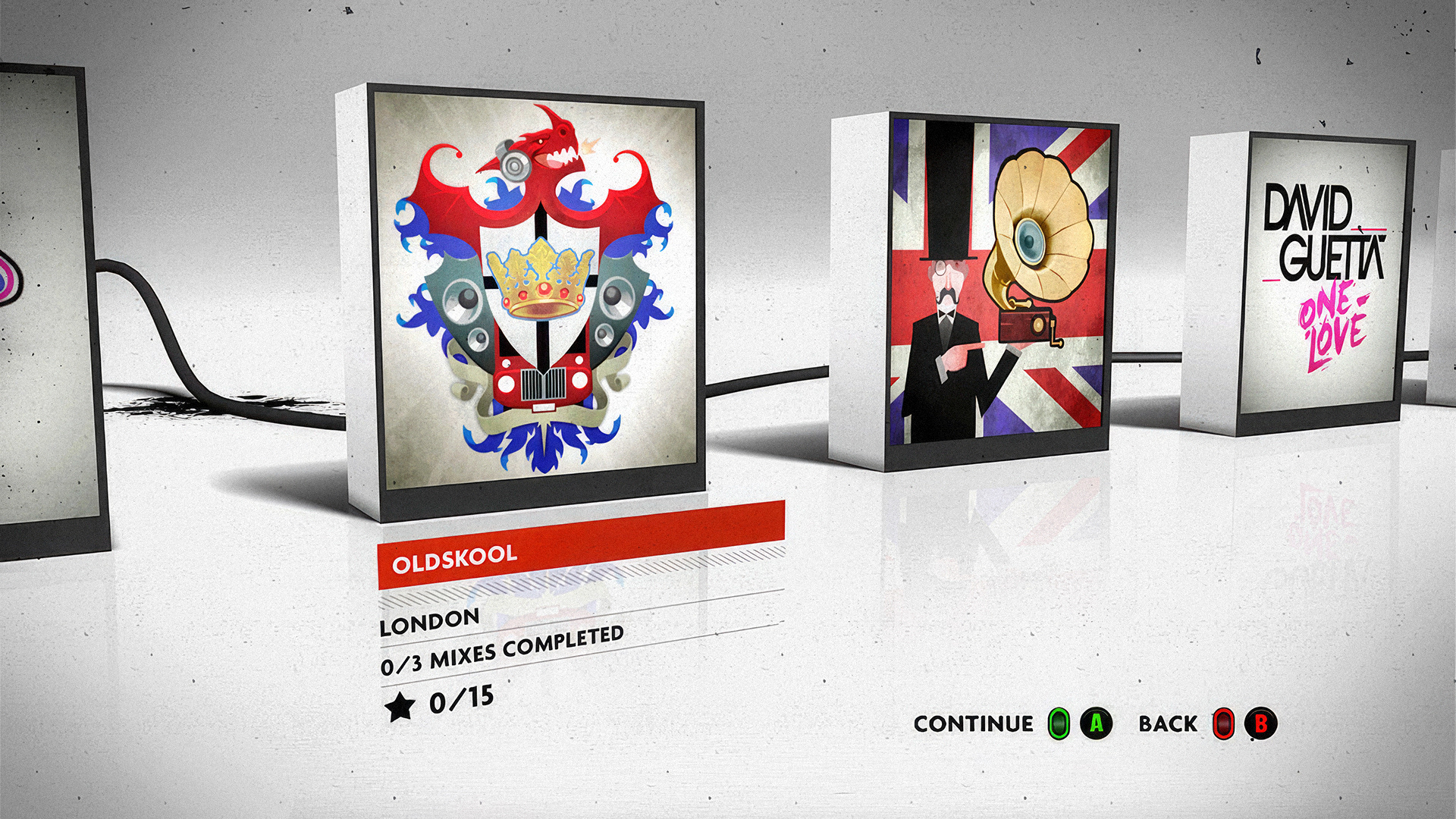
For the sequel, I pushed for contrast: a cleaner, more sophisticated front end that established the tone without competing with the intensity of the gameplay.
Menus should not only be functional, but also establish mood and identity.
The original game also used different button functions across different screens, which was not always intuitive. I proposed a universal input model for the entire interface: directional controls to move through menus, one button to proceed or select, and one button to go back. Additional buttons were reserved for specialist functions such as creating playlists. This consistent approach made the experience much easier to learn, more approachable and more user-friendly.
To give DJ Hero 2 its own personality, I looked beyond other rhythm games and drew inspiration from mainstream pop culture, television, entertainment, sculptural art and advertising. The front-end concept centred on audio cables connecting abstract floating speakers and pulling the user through the environment. As the camera raced forward, the cables stretched and splashed paint across the surfaces they touched. It was a bold, ambitious idea, and I’m still amazed we delivered it within the time available.
I took the creative lead across the front end and UI, establishing the art direction and designing the interface in full. I also had a strong influence on the in-game HUD and wider gameplay elements. On a music-based action-rhythm game, these areas represented a large proportion of the overall project.
The original UI leaned heavily into the wild energy of DJ culture and graffiti artwork. It looked great, but the in-game experience was already a bonkers DJ mash-up rave, so carrying that same intensity across the entire interface risked overwhelming the player.
For the sequel, I pushed for contrast: a cleaner, more sophisticated front end that established the tone without competing with the intensity of the gameplay.
Menus should not only be functional, but also establish mood and identity.
The original game also used different button functions across different screens, which was not always intuitive. I proposed a universal input model for the entire interface: directional controls to move through menus, one button to proceed or select, and one button to go back. Additional buttons were reserved for specialist functions such as creating playlists. This consistent approach made the experience much easier to learn, more approachable and more user-friendly.
To give DJ Hero 2 its own personality, I looked beyond other rhythm games and drew inspiration from mainstream pop culture, television, entertainment, sculptural art and advertising. The front-end concept centred on audio cables connecting abstract floating speakers and pulling the user through the environment. As the camera raced forward, the cables stretched and splashed paint across the surfaces they touched. It was a bold, ambitious idea, and I’m still amazed we delivered it within the time available.
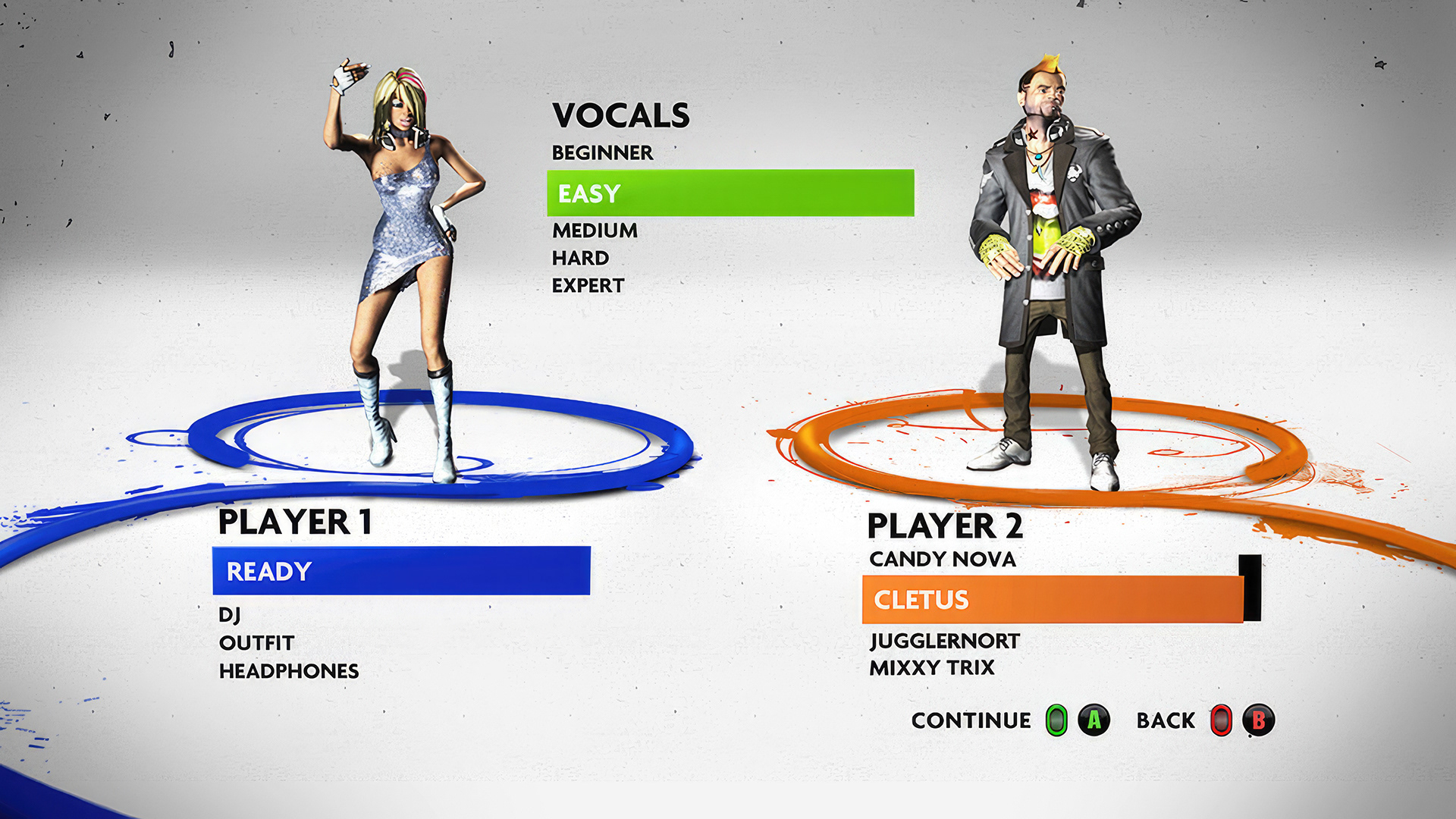
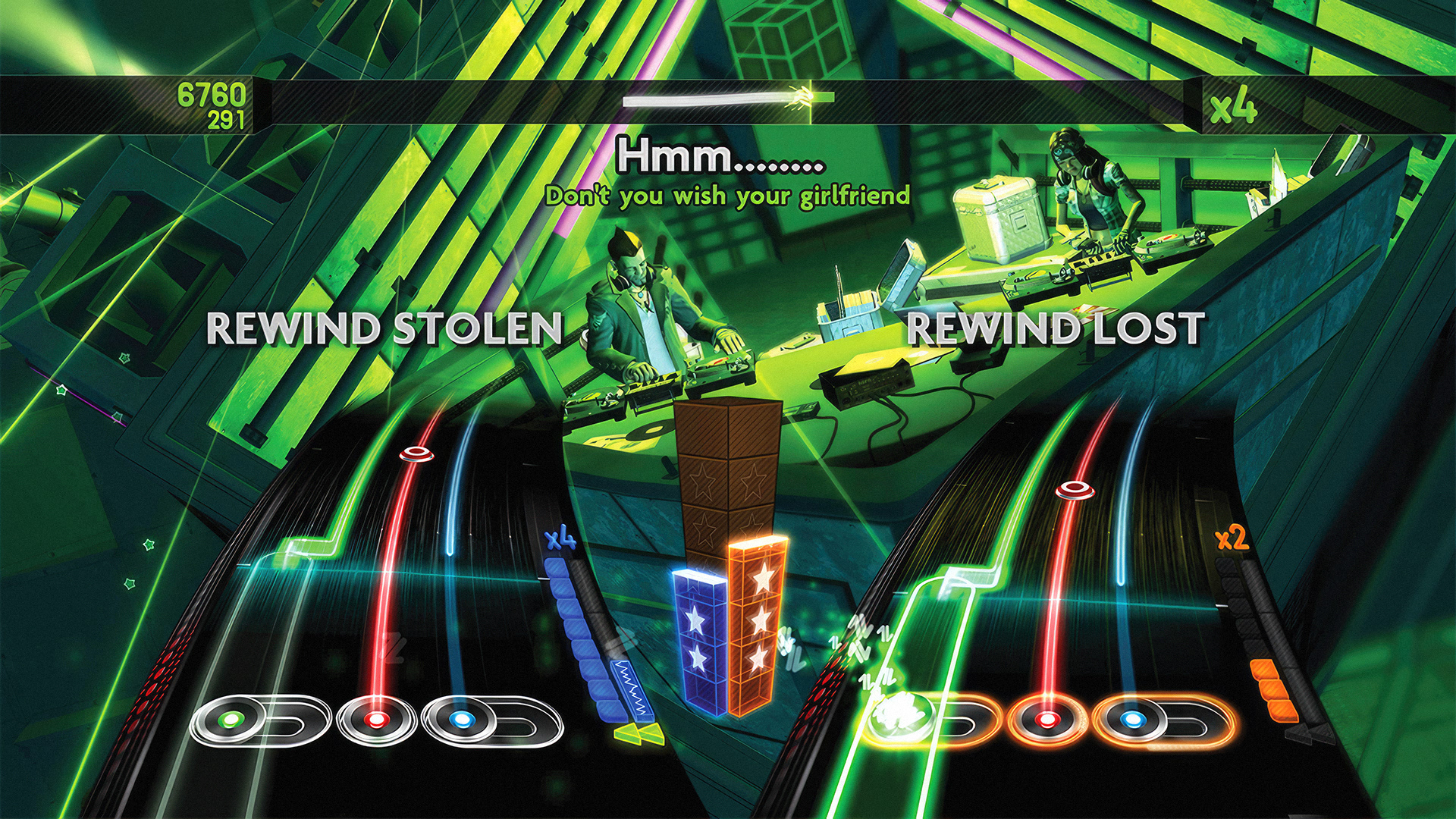
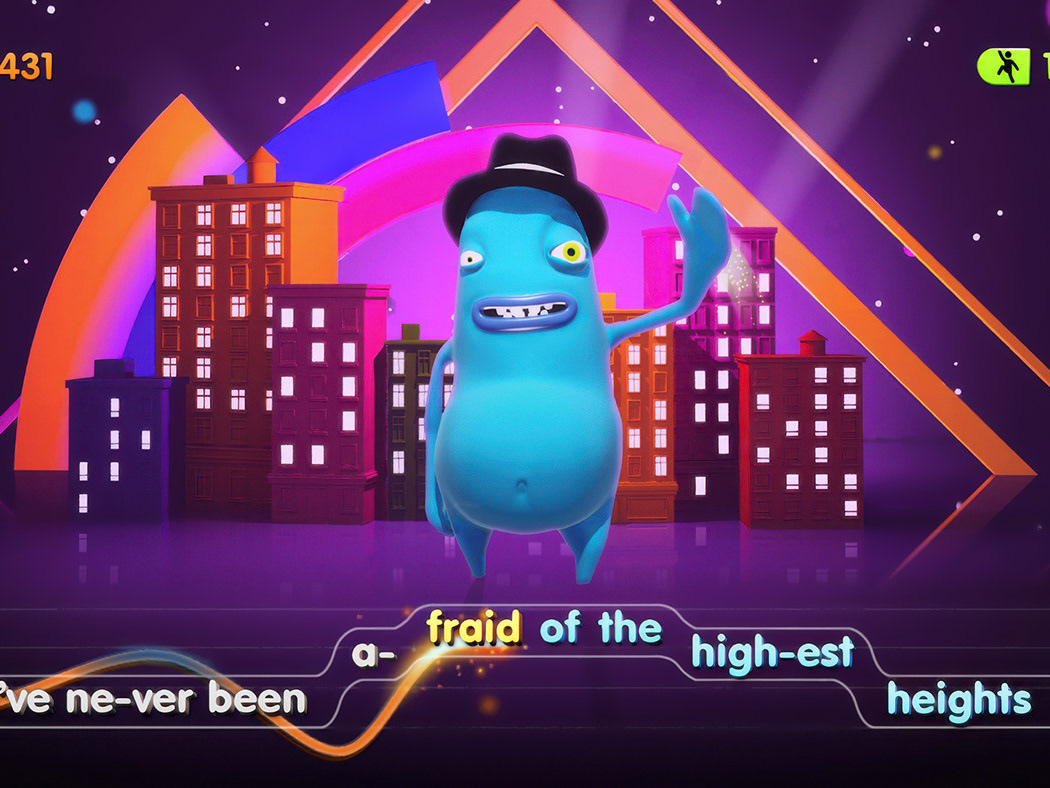
The graphical cues and tonal sophistication established in the front end were carried into the in-game HUD, results and reward flow. I helped shape how these elements adapted to complement the game’s vibrant visuals and high-energy musical flow.
I also strongly influenced the design of a set of bold totems that communicated progress and score. These worked particularly well during two-player battles, clearly showing who was ahead at any moment and amplifying the competitive energy.
It was a great project, delivered under tight deadlines and considerable pressure, and I was lucky to work alongside a brilliant group of people.
The finished game was very well received, achieving Metacritic scores of 88 on Wii and 86 on PlayStation 3 and Xbox 360. Game Informer awarded it 9.25/10, Nintendo Life gave it 9/10 and GameSpot scored it 8.5/10, specifically praising its “slick and appealing new menu system.”
I also strongly influenced the design of a set of bold totems that communicated progress and score. These worked particularly well during two-player battles, clearly showing who was ahead at any moment and amplifying the competitive energy.
It was a great project, delivered under tight deadlines and considerable pressure, and I was lucky to work alongside a brilliant group of people.
The finished game was very well received, achieving Metacritic scores of 88 on Wii and 86 on PlayStation 3 and Xbox 360. Game Informer awarded it 9.25/10, Nintendo Life gave it 9/10 and GameSpot scored it 8.5/10, specifically praising its “slick and appealing new menu system.”